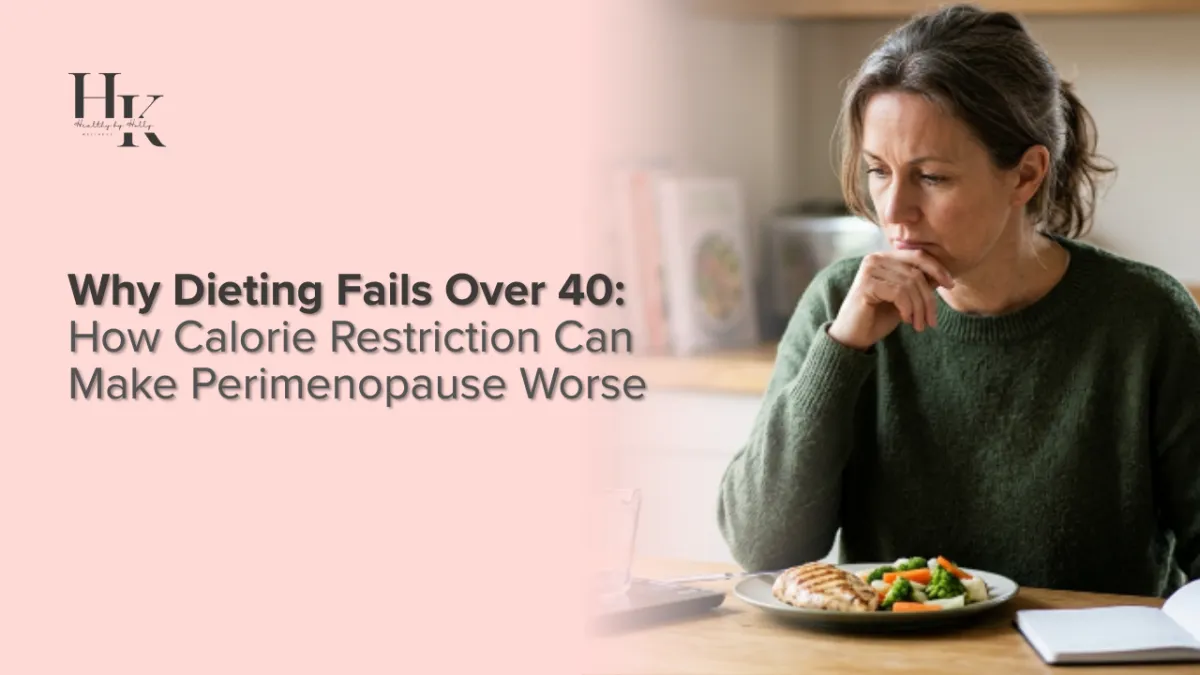
Why Dieting Fails Over 40: How Calorie Restriction Can Make Perimenopause Worse | Healthy By Holly
For many women, turning 40 brings a frustrating realization: the dieting methods that once worked suddenly stop producing results. Calories are cut lower, workouts become more intense, and yet the scale barely moves, the belly fat becomes stubborn, or worse, weight gain continues, especially around the midsection.
If this sounds familiar, you are not imagining it.
Perimenopause changes the way the body responds to stress, exercise, hormones, sleep, and nutrition. While calorie restriction has long been promoted as the “solution” for weight loss, extreme dieting can actually make many perimenopause symptoms worse. Research and lived experiences from women navigating midlife consistently point to hormonal shifts, muscle loss, stress hormones, and metabolic changes as major factors affecting fat loss after 40.
At Healthy By Holly, the focus is not on starvation diets or unsustainable restrictions. Instead, the goal is to help women support their metabolism, hormones, and long-term health through realistic lifestyle strategies designed specifically for midlife.
Why Weight Loss Feels Different After 40
During perimenopause, estrogen and progesterone levels fluctuate significantly. These hormonal changes impact:
Insulin sensitivity
Muscle mass
Cortisol levels
Sleep quality
Appetite regulation
Fat storage patterns
As estrogen declines, many women naturally lose lean muscle mass, which lowers resting metabolic rate. Less muscle means the body burns fewer calories at rest.
At the same time, stress hormones often rise due to poor sleep, increased responsibilities, and hormonal instability. Higher cortisol levels can encourage fat storage around the abdomen and increase cravings for sugar and processed foods.
This is why simply “eating less” is often not enough and in many cases, it can backfire.
The Problem With Traditional Dieting After 40
Most diets rely on aggressive calorie restriction. While this may create short-term weight loss, it can create long-term metabolic stress for women in perimenopause.
When the body senses prolonged restriction, it interprets it as a stressor. In response, the body may:
Slow metabolism
Increase cortisol production
Break down muscle tissue
Increase hunger hormones
Trigger fatigue and brain fog
Disrupt sleep patterns
Intensify mood swings
For women already dealing with fluctuating hormones, this added stress can make symptoms significantly worse.
Many women report feeling exhausted, inflamed, constantly hungry, and unable to recover from workouts while following low-calorie diets during perimenopause.
Why Calorie Restriction Can Make Perimenopause Worse
1. It Raises Cortisol Levels
Severe calorie restriction tells the body it is under threat. This can elevate cortisol, the body’s primary stress hormone.
High cortisol levels are associated with:
Belly fat storage
Increased cravings
Sleep disruption
Fatigue
Anxiety
Muscle breakdown
For many women over 40, chronic stress combined with under-eating creates the perfect environment for stubborn weight gain.
2. It Accelerates Muscle Loss
After age 40, women naturally begin losing muscle mass at a faster rate. When calories are too low, especially protein intake, the body may break down muscle for energy.
This matters because muscle is metabolically active tissue. The more muscle you maintain, the more efficiently your body burns calories.
At Healthy By Holly, strength training and adequate protein are emphasized because preserving muscle is one of the most important strategies for supporting metabolism during perimenopause.
3. It Disrupts Blood Sugar Stability
Many women in perimenopause become more insulin resistant due to hormonal shifts. Restrictive dieting can worsen blood sugar fluctuations, leading to:
Energy crashes
Intense sugar cravings
Mood swings
Increased fat storage
Difficulty concentrating
Balanced meals with protein, fiber, and healthy fats help stabilize blood sugar far more effectively than skipping meals or surviving on low-calorie foods.
4. It Makes Recovery Harder
Women over 40 often notice they cannot recover from intense exercise the way they once could. When paired with under-eating, excessive cardio or overtraining may increase inflammation and fatigue.
This is why smarter fitness strategies matter more than punishing workouts.
Sustainable fat loss during perimenopause often comes from:
Strength training
Walking
Stress management
Better sleep
Proper nutrition
Hormone support
—not endless cardio and starvation.
Why “Eat Less, Move More” Often Fails in Perimenopause
The traditional weight-loss advice of “eat less and exercise more” oversimplifies the hormonal complexity of midlife women’s health.
Perimenopause is not just about calories. It involves:
Hormonal adaptation
Nervous system regulation
Sleep quality
Recovery capacity
Muscle preservation
Stress resilience
A strategy that ignores these factors often leaves women feeling frustrated and defeated.
Many women report that they are eating healthier than ever yet continue gaining weight.
The issue is not always lack of discipline. Often, the body simply needs a different approach.
What Actually Works for Women Over 40
Prioritizing Protein
Protein supports:
Muscle maintenance
Satiety
Blood sugar balance
Recovery
Metabolism
Women in perimenopause often benefit from higher protein intake combined with resistance training.
Strength Training Instead of Excessive Cardio
Strength training helps:
Preserve lean muscle
Improve insulin sensitivity
Increase metabolism
Support bone density
Improve body composition
Even two to four sessions per week can make a major difference.
Managing Stress and Cortisol

Stress management is essential for hormone health.
Helpful strategies include:
Walking outdoors
Breathwork
Quality sleep
Reducing overtraining
Meditation
Proper recovery days
Perimenopause is not the time to constantly push harder. The body responds better to consistency and balance.
Eating Enough Nutrient-Dense Foods
Instead of constantly cutting calories, focus on:
Whole foods
Fiber-rich vegetables
Healthy fats
Lean protein
Hydration
Restrictive dieting often creates nutrient deficiencies that worsen fatigue, brain fog, and hormonal symptoms.
Improving Sleep Quality
Sleep directly affects:
Cortisol
Hunger hormones
Insulin sensitivity
Recovery
Energy levels
Poor sleep alone can make fat loss dramatically more difficult during perimenopause.
Sustainable Fat Loss Is Different After 40
The goal during perimenopause should not be eating as little as possible.
The goal should be:
Supporting hormones
Preserving muscle
Reducing inflammation
Stabilizing blood sugar
Improving energy
Creating sustainable habits
Quick-fix diets often fail because they ignore the unique physiological changes happening in midlife women.
At Healthy By Holly, the focus is on helping women work with their bodies instead of fighting against them.
Signs Your Diet May Be Hurting Your Hormones
You may be under-eating or over-restricting if you experience:
Constant fatigue
Intense cravings
Poor sleep
Increased belly fat
Mood swings
Low energy workouts
Hair thinning
Feeling cold frequently
Plateaued weight loss
These are often signs the body is under stress rather than thriving.
A Better Approach to Midlife Wellness
Perimenopause requires a different mindset around health and fat loss.
Instead of asking:
“How little can I eat?”
Ask:
“How can I support my body so it feels safe, strong, and energized?”
Long-term success often comes from:
Building muscle
Nourishing the body
Managing stress
Improving recovery
Creating realistic habits
Supporting hormonal health
This is how sustainable wellness is built after 40.
Ready to Feel Better in Midlife?
If you are tired of restrictive diets and frustrated with stubborn weight gain, there is a better way.
Healthy By Holly Coaching Programs are designed specifically for women navigating perimenopause, menopause, hormone changes, and midlife fat loss.
Whether your goal is more energy, improved metabolism, sustainable fat loss, or simply feeling confident again, personalized support can help you stop guessing and start making progress.
Schedule a consultation with Healthy By Holly today
Explore personalized wellness coaching for women over 40
Learn how to support your hormones without extreme dieting
FAQs
Why does dieting stop working after 40?
Hormonal changes during perimenopause affect metabolism, muscle mass, insulin sensitivity, stress hormones, and fat storage. Traditional calorie restriction often fails because it does not address these underlying changes.
Can eating too little cause weight gain in perimenopause?
Severe calorie restriction may increase cortisol levels, slow metabolism, and contribute to muscle loss, which can make fat loss more difficult over time.
What is the best diet for perimenopause?
The best approach usually focuses on whole foods, adequate protein, fiber, healthy fats, hydration, and blood sugar balance rather than extreme calorie restriction.
Is strength training important during perimenopause?
Yes. Strength training helps preserve muscle mass, improve metabolism, support bone health, and improve insulin sensitivity during midlife.
How can I lose belly fat during perimenopause?
A combination of strength training, stress management, quality sleep, balanced nutrition, and hormone support is often more effective than restrictive dieting alone.
Does cortisol affect weight gain after 40?
Yes. Chronic stress and elevated cortisol levels may increase cravings, promote abdominal fat storage, and interfere with recovery and sleep.
Can Healthy By Holly help with hormone-related weight gain?
Yes. offers wellness coaching designed specifically for women navigating perimenopause, menopause, metabolism changes, and sustainable fat loss.